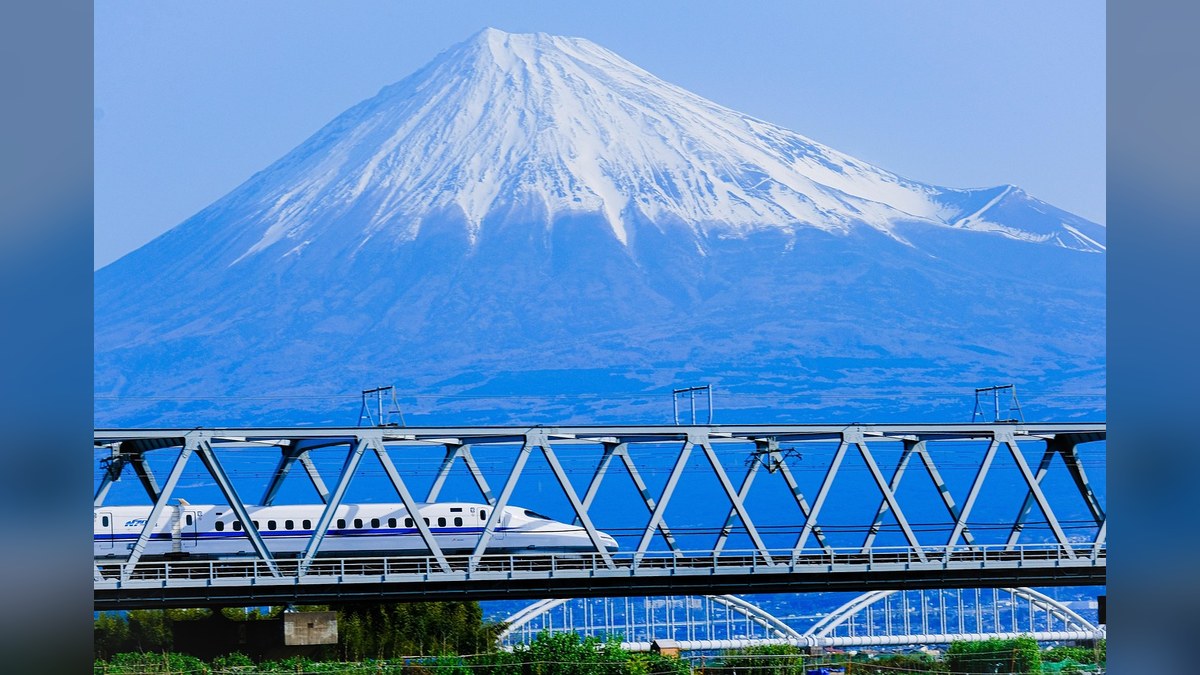
Imagem: Photo by phgvu307 on Pixabay
Hokuriku Shinkansen extension to Osaka confirmed despite environmental concerns
Japan confirms Wakasa Route for Hokuriku Shinkansen extension to Shin-Osaka, with construction starting in 2027 and opening expected after 2054.
Fonte principal: Despite environmental concerns, the Hokuriku Shinkansen heads for Osaka · Por Redação Mundo Trilhos
The Japanese government confirmed on July 15 its preferred option for extending the Hokuriku Shinkansen south from its current terminus at Tsuruga to Shin-Osaka, according to railwaygazette.com.
Having reached Kanazawa from Tokyo in March 2015, the Hokuriku Shinkansen was extended by a further 125 km from Kanazawa to Tsuruga in March 2024. It had always been intended in Japan’s original high speed rail vision of the 1970s that this line would eventually be extended to Osaka to provide connectivity across a swathe of western Honshu, but selecting a viable route and finding the money to build it have both proved challenging.
While the high speed line was gradually edging towards Tsuruga, serious discussions over the route to Osaka began in 2012 between transport ministry MLITT, Shinkansen project delivery body JRTT and the prefectural authorities.
Having assessed three possible traces, the government named the so-called ‘Wakasa Route’ as its preferred choice in December 2015, when it was hoped that construction might start around 2030 and take up to 15 years. This option takes the line southwest from Tsuruga via Obama, Maizuru and then in tunnel under the Tanba Highlands parallel to the western shore of Lake Biwa, passing 5 km west of Kyoto station. This was the shortest route of the three assessed, but the most expensive.
It remains the preferred option, despite subsequent economic and demographic changes. MLITT and JRTT published details of the proposed route and station locations in August 2024.
However, even with a preferred corridor chosen, getting around central Kyoto while still serving the conurbation has brought a series of challenging trade-offs. The government has now reiterated that instead of building an expensive and logistically difficult tunnel directly underneath the heavily congested Kyoto station, the Hokuriku line will serve an underground hub near Katsuragawa, approximately 5 km west of the centre. This interchange will provide links to various local rail and metro routes, and offer connecting journeys to and from Kyoto station taking around 10 min.
This ‘Katsuragawa Plan’ was primarily adopted to mitigate concerns raised by the Kyoto authorities over potential environmental damage caused by tunnelling to local groundwater supplies and important heritage sites.
The government says it now expects the 139 route-km extension, including the 34 km tunnel serving Kyoto, to cost ¥5.5tr (US$34bn). Detailed design and environmental procedures are expected to start in the coming months, with MLITT and JRTT aiming to break ground as early as fiscal year 2027. However, the civil works are projected to last at least 26 years, pushing the opening date back to at least 2054. Journey time from Kanazawa to Shin-Osaka is expected to be 1 h 21 min.
The new section of railway is to be financed through access payments from each JR Group operator using the line, with the aim of covering at least 75% of the total construction cost.
At present, the cost-sharing mechanism between the national government and local authorities is at a 2:1 ratio. However, to ease the burden on local authorities, this calculation is expected to be revised, and the International Tourism Tax levied on foreign visitors entering and leaving Japan is also planned to be used to support the funding model for the line.